

Risk Management at NOLS
At NOLS, we embrace the physical and emotional challenge of the natural environment to attain our learning objectives.
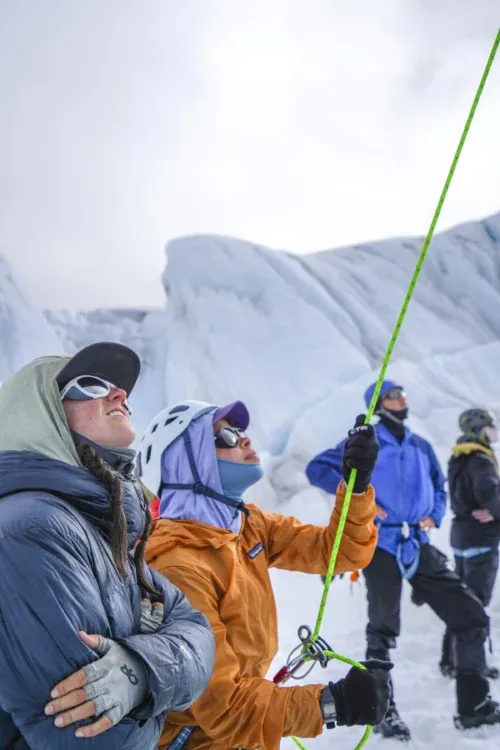
Wilderness adventure involves hazards: rock fall, quickly-flowing rivers, and steep terrain can pose a risk to even the most experienced outdoor leader. Activities ranging from simple day hikes to climbing glaciers can, due to the unpredictable forces of nature or an error in judgment, become dangerous and potentially life-threatening. Students transport their own gear, sleep outdoors—possibly in mixed gender tent groups—prepare their own meals, and are expected to care for themselves in weather conditions that can be extreme. Each student plays an important role in the success of a NOLS course. Good physical conditioning and a positive mental attitude are essential. Should unforeseen circumstances arise, such as weather, permit restrictions, unusual situations, risk management concerns, or if NOLS deems it necessary, NOLS reserves the right to make changes to course activities, curriculum and area locations.
On all NOLS courses students will be independent (unaccompanied by instructors) at various times. This will include time in and around camp such as while cooking or performing camp chores. Instructors may allow students to travel away from camp, and on many courses students have the opportunity to travel without instructors for one or more days. Students also often have independent unsupervised time, usually in town, before and after their course starts or between sections of semesters.
Our courses are expeditions that travel through remote areas, which can create complex situations should an emergency arise. It is not uncommon to be days from medical help, but NOLS instructors are trained in wilderness first aid and backed by comprehensive wilderness emergency response and evacuation systems. Instructors carry first aid kits that include some specific medications for treating sick or injured students in remote locations. Many of the medical incidents that might occur are simple and often treated in the field. For more serious incidents or when a student is evacuated for a medical reason, they will be taken to a medical facility for evaluation or treatment.
Instructors carry satellite telephones, radios, or other electronic communication devices on each course to use in the event of life-threatening emergencies, but this does not guarantee communication from the field to our support bases. Portable telephone and radio signals may be subject to interference caused by terrain, atmospheric conditions, and other variables and may not always work.
We are committed to promoting the physical and emotional well-being of all students and we are proud of our excellent record managing the risks of wilderness travel, but it is important you understand that there are risks. Some adventure programs say that they can guarantee your safety. NOLS does not. The risk of injury, even serious injury or death, is always present in the outdoor environment. Indeed, much of the value of a NOLS course lies in learning how to identify hazards and adapt behavior to strive to avoid injury or illness. We feel that the risks are manageable and that no organization is better equipped to manage them than NOLS.
NOLS has developed specific risk management practices to protect student and staff well-being during the COVID-19 pandemic, which you can read in further detail on our About page.
